
From wedding bouquets to hand-stitched floral embroidery, silk ribbon remains one of the most versatile materials in floral design and craft work.
Silk ribbon is a soft, woven-edge ribbon made from 100% silk, prized for its natural drape, sheen, and ability to hold dye beautifully. It’s used in two main ways: as a finishing touch in floral design (wrapping bouquet stems, decorating wedding florals) and as a material for silk ribbon embroidery, where it’s stitched onto fabric to create dimensional flowers, leaves, and decorative patterns.
Silk Ribbon at a Glance
| Material | 100% silk, woven-edge |
| Common Widths | 2mm, 4mm, 7mm (embroidery); wider widths (25mm+) for bouquet wraps |
| Main Uses | Bouquet wrapping, wedding décor, ribbon embroidery, garment trim |
| Needle Type (Embroidery) | Chenille needle, size 18–22 depending on ribbon width |
| Care | Hand wash or dry clean; avoid high heat on dyed ribbon |
What Is Silk Ribbon?
Silk ribbon is a narrow strip of woven silk fabric, valued for its soft texture, natural sheen, and the way it takes and holds dye. Unlike synthetic satin or rayon ribbon, silk ribbon has a slightly imperfect, organic drape — which is part of why it’s favored for both high-end floral styling and hand embroidery, where a bit of natural irregularity adds character rather than looking mass-produced.
Silk Ribbon in Floral Design
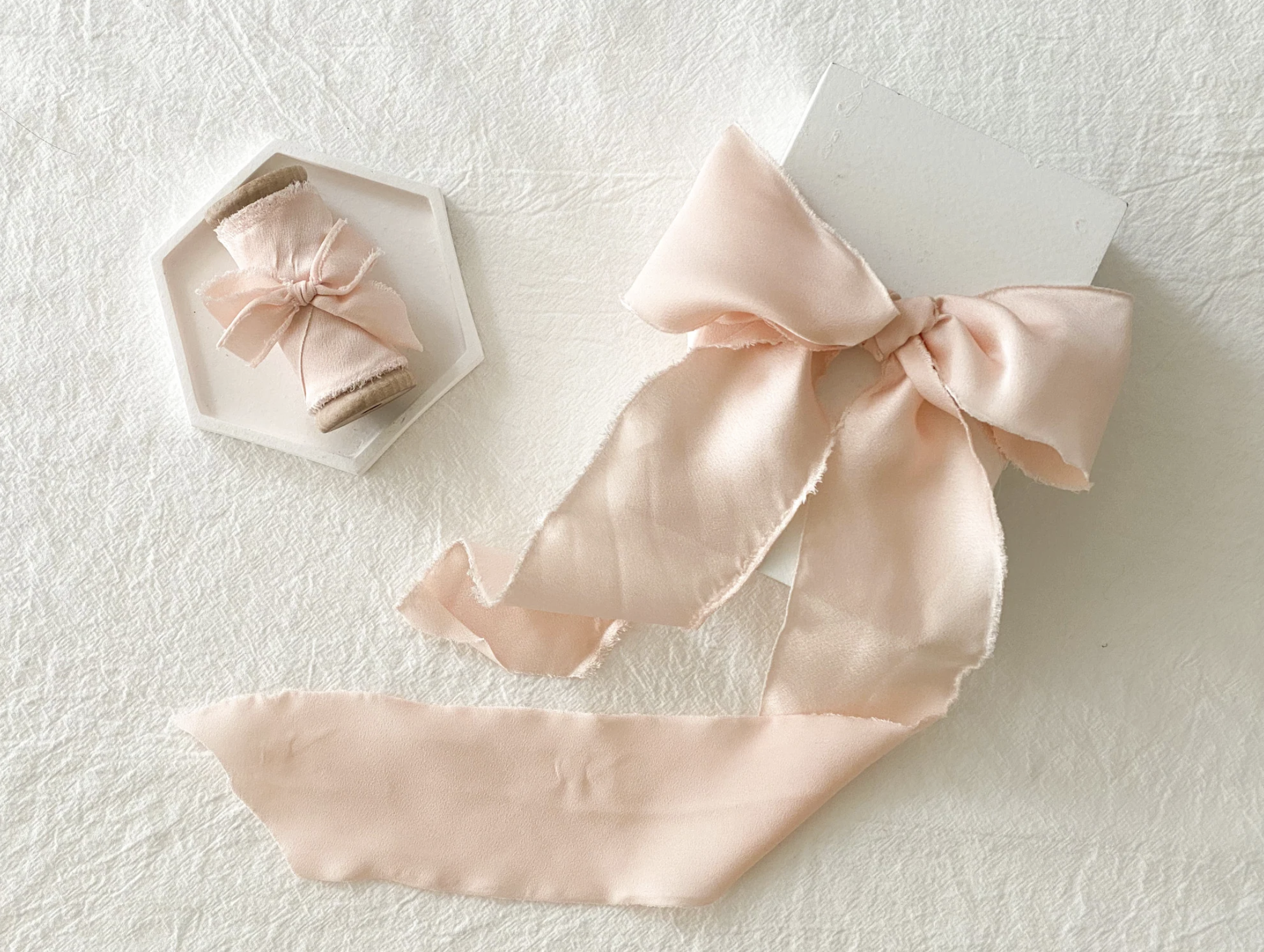
In floral design, silk ribbon is most commonly used to wrap bouquet stems, finishing a bouquet with soft, trailing tails that move naturally in photos — a popular detail in wedding florals. Hand-dyed silk ribbon, in particular, is favored for its subtle color variation, which pairs well with the organic look of fresh flowers.
Quick Tip
When wrapping a bouquet, wind the ribbon around the stems at a slight downward angle, then secure with a pin through all layers before letting the tails hang loose — this keeps the wrap secure without looking stiff.
Silk Ribbon Embroidery Basics
Silk ribbon embroidery is a hand-stitching technique that uses ribbon instead of (or alongside) embroidery floss to create dimensional flowers, leaves, and vines. The ribbon’s width and softness allow it to be looped, folded, and twisted directly into the stitch, giving finished designs a raised, three-dimensional look that flat embroidery can’t replicate.
A few basics to get started:
- Needle: Use a chenille needle (size 18–22) with an eye large enough for the ribbon to pass through without crushing it.
- Ribbon width: 2mm and 4mm ribbon are the most beginner-friendly for small flowers and buds.
- Fabric: Most fabrics work, though densely woven fabric can make it harder to pull the ribbon through.
- Core stitches to learn first: ribbon stitch (for petals and leaves), lazy daisy stitch, and French knots (for buds and flower centers).
How to Care for Silk Ribbon
Silk ribbon is delicate, so it holds up best with gentle handling. Hand wash in cool water when needed, avoid wringing it, and let it air dry flat or hanging. If ironing, use a low heat setting — high heat can dull hand-dyed color or damage the fibers.
Frequently Asked Questions
What is the difference between silk ribbon and satin ribbon?
Silk ribbon is made from natural silk fiber and has a softer, slightly imperfect drape, while satin ribbon is typically synthetic (polyester or rayon) with a stiffer, glossier finish. Silk is generally preferred for embroidery and fine floral detailing, while satin is a more affordable, durable option for everyday wrapping.
Can you use silk ribbon for embroidery on any fabric?
Most fabrics work, including cotton, linen, wool, and knits. Very densely woven fabrics can make it harder to pull the ribbon through without crushing it, so lighter to medium-weight fabrics are generally easier for beginners.
How do you keep silk ribbon from fraying?
Woven-edge silk ribbon is far less prone to fraying than raw-cut silk strips. For raw edges, a small dab of fray-check liquid or a narrow hand-rolled hem can help keep the edge intact.
Is silk ribbon good for wedding bouquets?
Yes — silk ribbon is one of the most popular choices for wedding bouquet wraps because of its natural drape and the way hand-dyed variations complement fresh flowers in photos.